
Crossload Prevention in Top Rope Soloing isn’t for the Fear of Breaking Carabiners
It’s to ensure smooth, predictable autofeeding so your backup device stays correctly oriented and doesn’t interrupt the system.
When top rope soloing, certain body positions can twist the device and side-load the carabiner, which can disrupt autofeeding. Autofeeding is crucial for a safe and fun TRS setup.
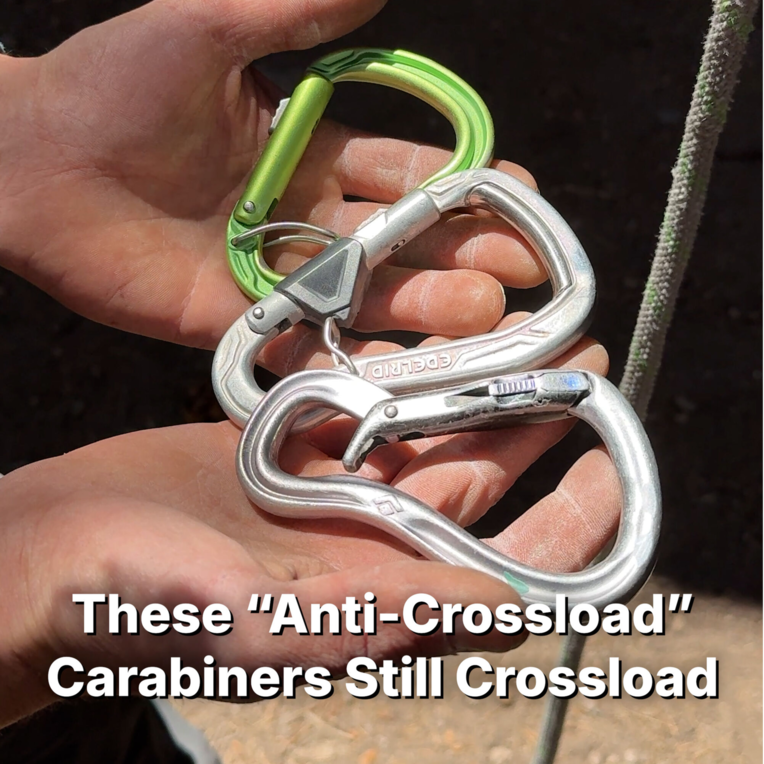
>> Watch this short video about anti-crossload carabiners
“Anti-crossload” carabiners help—but they’re not the whole solution.
For smooth, predictable autofeeding, add crossload protection at the device side of your setup.
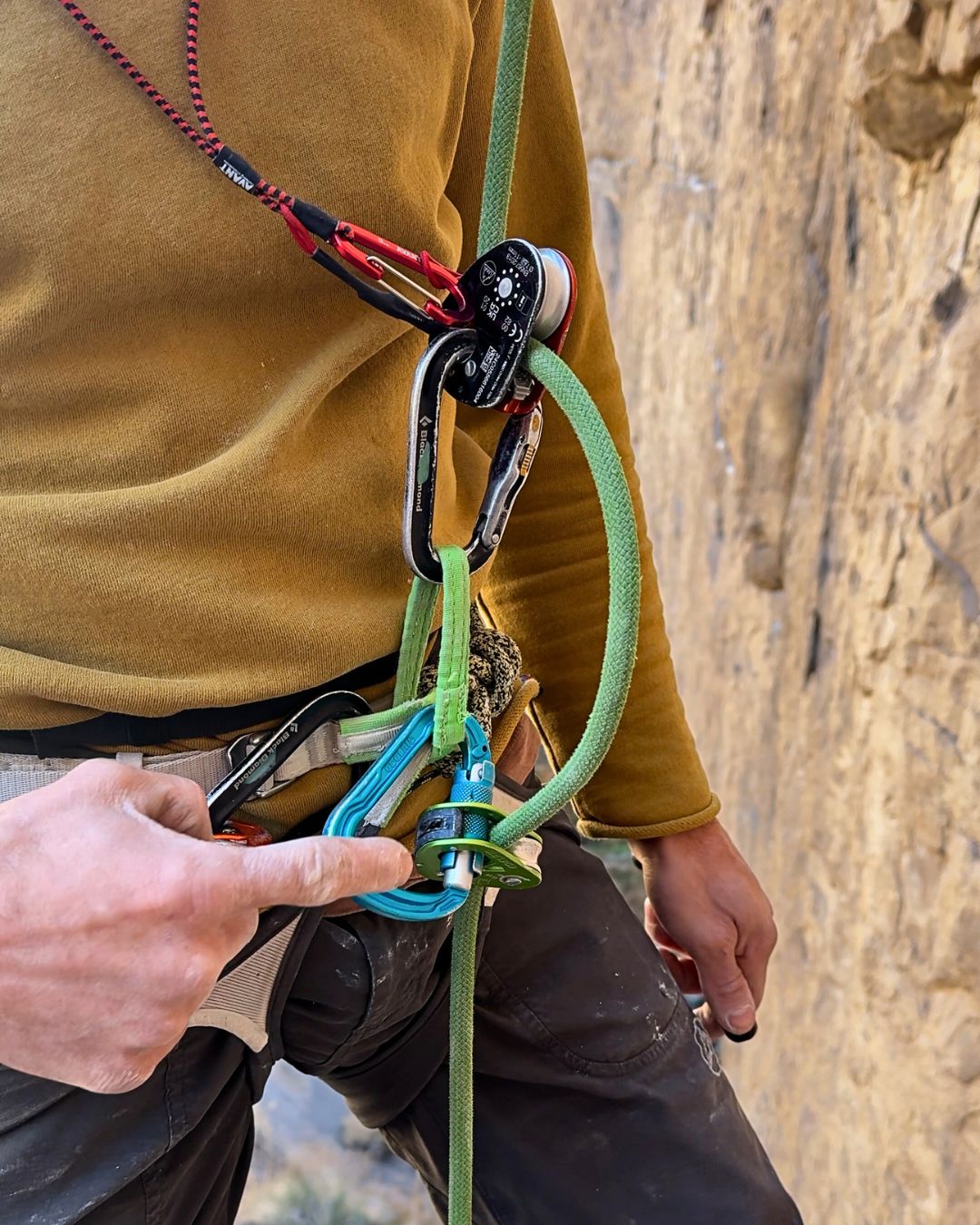
The Flex-Link Anti-Crossload protector keeps your backup device properly oriented inline, even as body position and rope path change. The whole system will consistently autofeed.
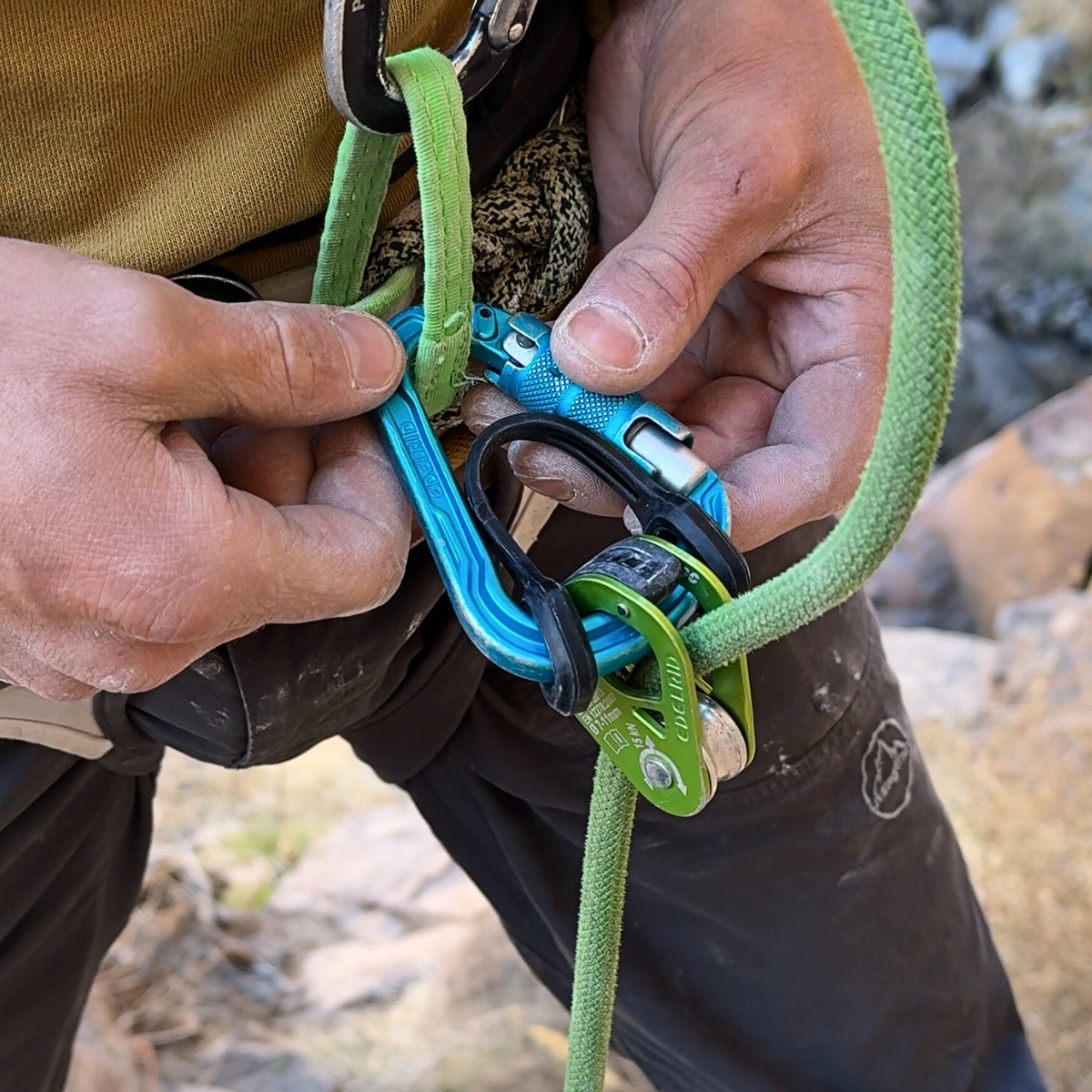
Do you need a Flex-Link on the top device?
The top device is tensioned upward with the Neck Lanyard, holding it inline up at the top of the carabiner, so a Flex Link is not really needed.
For TRS, the Flex Link is more for keeping things inline and feeding smoothly. The crossloading risk is negligible for small top rope falls.
Can you setup the device so that it's held in the smaller chamber of existing anti-crossload carabiners?
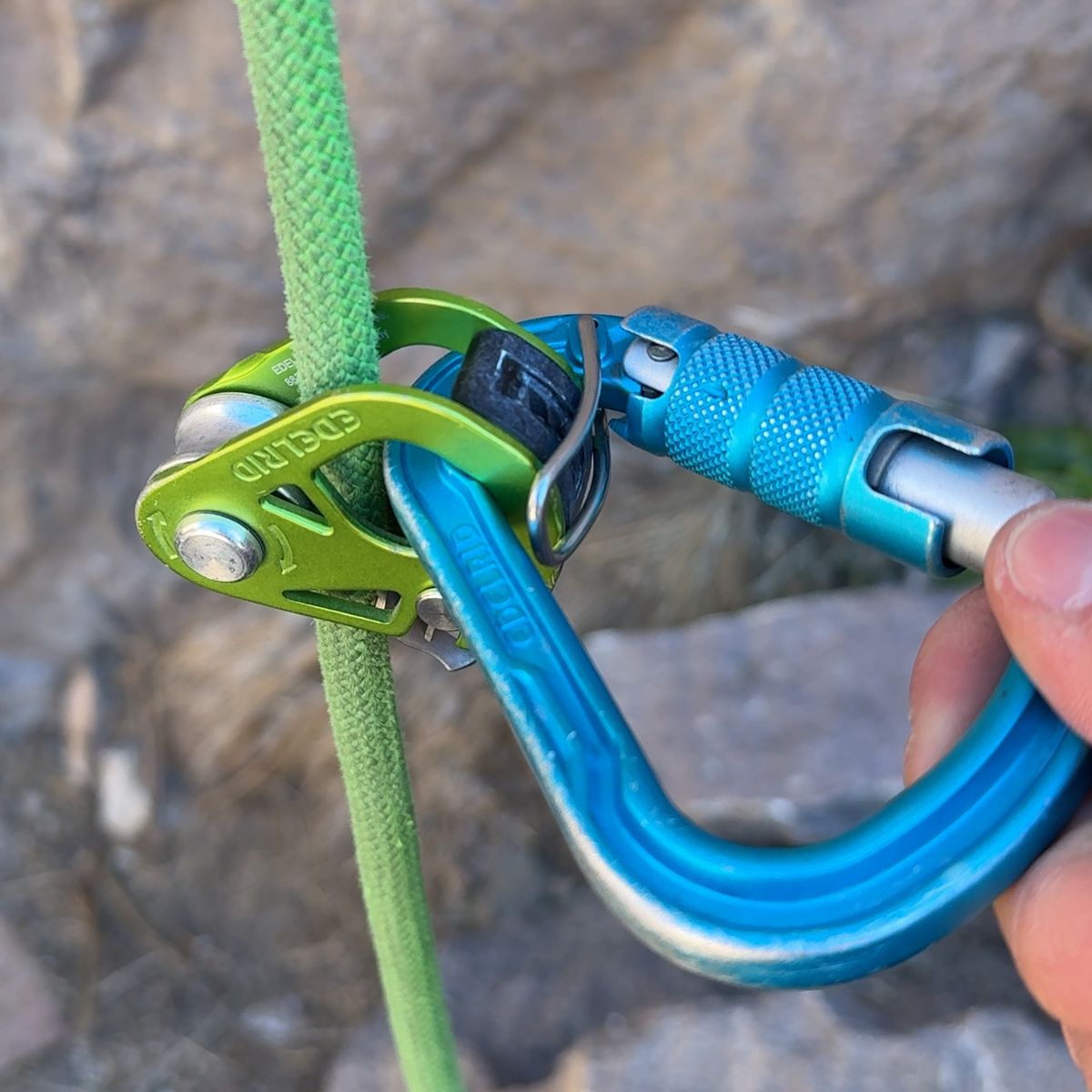
We've found that setting up the progress capturing device into the smaller chamber (usually used for belay loops) on anti-crossload carabiners might fit with some effort. But, the wide progress capturing pulleys don't fit well in this small side - it will usually sit sideways and result in awkward autofeeding issues.


